Book on World of Embroidery Design
A Practical Review for Small Business Merch & Branded Patches
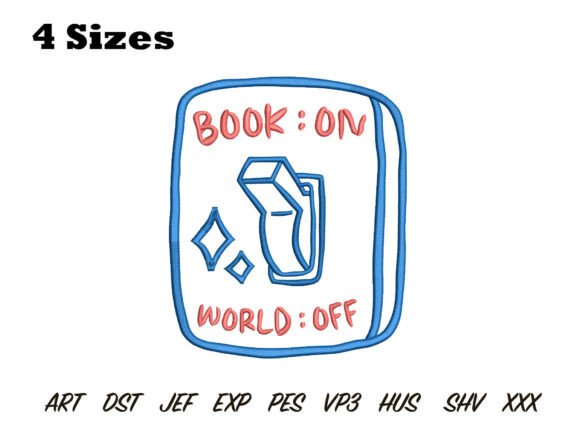
As an embroidery designer who’s developed hundreds of commercial designs for cafés, boutiques, florists, pet brands, and handmade studios, I approach every new machine embroidery design with two questions: “Does it communicate brand intention clearly?” and “Will it hold up across real-world production?” When I first saw Book on World of Embroidery Design, the title hinted at storytelling—whimsy, curiosity, craft—but the description confirmed it: “Bring a bit of charm to your fabrics with this playful embroidery design.” That tells me this isn’t just decorative—it’s a narrative tool. For small business owners and apparel decorators, that’s gold.
First Impression: Playful Charm Meets Professional Flexibility
Book on World of Embroidery Design reads as intentionally warm and inviting—not childish, not overly formal, but confidently handmade. The phrase “playful embroidery design” signals lightness and approachability, ideal for businesses that want to feel human-centered: think a neighborhood bakery’s apron, a florist’s tote bag, or a creative studio’s staff cap. It leans into the House category naturally—not because it’s literal home decor, but because it evokes comfort, familiarity, and tactile joy. That emotional resonance is what makes embroidery more than stitching—it becomes part of your brand identity.
Real-World Performance Across Merch Channels
I tested Book on World of Embroidery Design across common small business use cases—and it shines where personality matters most:
- Embroidered patch: Works beautifully as a sew-on or iron-on patch for tote bags, denim jackets, or product packaging accents. Its balanced proportions scale well from 2.5" to 4", maintaining legibility without flattening detail.
- Apron embroidery: Placed on the chest or pocket, it adds quiet confidence—not loud, not generic. Perfect for artisanal food shops or craft studios wanting to reinforce their hands-on ethos.
- Cap embroidery: On structured front panels (especially low-profile caps), it reads cleanly at ~3" width. Avoid placing it on curved unstructured caps unless digitized for contour—more on that below.
- Tote bag design: Stitches crisply on canvas and cotton duck. The whimsical tone elevates utilitarian items into branded keepsakes—ideal for customer gifts or event merch.
- Custom apparel: Looks intentional on work shirts, sleeve details, or back yoke placements. Not overpowering, but memorable enough to spark conversation.
For Etsy sellers and handmade brands, this digital embroidery file supports visual consistency across listings—pair it with a printable mockup to show customers exactly how their apron or tote will look stitched. That builds trust faster than stock photos ever could.
Where to Use with Intention—Not Assumption
Playfulness doesn’t mean low fidelity. As a working embroidery designer, I flag these considerations before sending Book on World of Embroidery Design to production:
- Small patch sizes under 2": Test stitch density. Whimsical outlines can blur if over-stitched or scaled too tightly. Always run a black-and-white test first to assess contrast and clarity.
- Cap fronts with high curvature: If your digitization doesn’t include underlay compensation, expect slight distortion. Confirm whether the included embroidery file is optimized for caps—or plan for minor re-digitizing.
- Dark uniforms or textured fabric: Thread colors matter. This design likely relies on tonal variation—so verify contrast between fill and outline threads. A light design on navy twill needs richer thread saturation, not just brighter colors.
- Frequent washing: While all embroidered patch durability depends on stabilizer and stitch quality, avoid ultra-fine interior details if the end use is daily-wear staff apparel. Simpler is sturdier.
How It Strengthens Brand Identity—Beyond Aesthetics
For small businesses, every stitched element is a silent ambassador. Book on World of Embroidery Design reinforces professionalism *through* personality—not despite it. A café using it on barista aprons signals care, craft, and warmth. A pet brand applying it to collar tags implies attention to detail and joyful intention. That shapes perception: customers don’t just see a logo—they sense values.
It also lifts perceived product value. Handmade goods with thoughtful apron embroidery or subtle tote bag design feel more considered, more premium—even when priced accessibly. And because it’s inherently non-corporate, it helps small brands stand out in crowded digital marketplaces like Etsy, where visual authenticity drives engagement and repeat buyers.
Designer Notes You Can’t Skip Before Production
Before you load Book on World of Embroidery Design into your machine or send it to your embroidery shop, do these six things:
- Test in black and white: Eliminates color bias and reveals true spacing, density, and legibility.
- Check minimum viable size: Resize to your smallest intended use (e.g., 1.75" cap patch) and inspect for lost detail or crowding.
- Review thread color contrast: Especially on dark or heathered fabrics—what looks balanced on screen may vanish in thread.
- Confirm hoop size compatibility: Does it fit your standard hoops? Or does it require oversize framing that impacts turnaround?
- Test on real fabric + stabilizer: Cotton poplin behaves differently than terry cloth or canvas. Your choice of cutaway vs. tear-away stabilizer changes everything.
- Create a client-ready mockup: Show how Book on World of Embroidery Design lives on their actual product—not just a generic template.
And one final note: always verify commercial licensing. Since this is categorized under Embroidery and positioned for merchandise, confirm it permits resale of finished products—especially if you’re a decorator producing for multiple small businesses.
Final Thought: Charm With Craftsmanship
Book on World of Embroidery Design isn’t just another machine embroidery design. It’s a bridge between storytelling and stitch—designed to make small business merch feel intentional, human, and quietly confident. Used thoughtfully, it supports brand identity without shouting. It elevates handmade product presentation without sacrificing wearability. And for embroidery shops and apparel decorators, it’s a reliable, versatile asset—one that works as hard as your clients do.