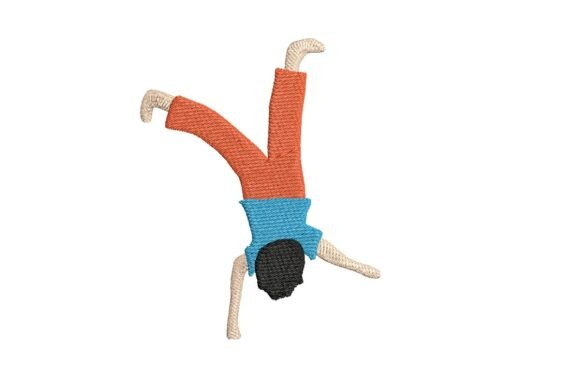
Boy Doing a Cartwheel Embroidery Design
A Craft Fair Designer’s First Look: Bold, Joyful & Instantly Relatable
As someone who’s stitched hundreds of designs for weekend markets and handmade shops, my first impression of Boy Doing a Cartwheel Embroidery Design is unmistakable: it’s bold, joyful, and instantly relatable. There’s no hesitation—no “what is this?” pause. It reads as energetic and playful at a glance, with strong movement lines and clear body language. It leans modern and cheerful rather than rustic or farmhouse, and avoids cutesy clichés by focusing on authentic motion. For craft fair buyers—especially parents, teachers, coaches, and young-at-heart creatives—this design doesn’t whisper; it grins and flips right into their cart.
Where This Design Shines in Real-World Product Displays
In my booth setup—tote bags front-and-center, aprons draped over a ladder shelf, tea towels folded beside embroidered patches—I’ve tested where Boy Doing a Cartwheel Embroidery Design commands attention most effectively:
- Tote bag design: Perfect as a large focal piece on the front panel. The dynamic pose fills space beautifully without overcrowding, and the upward motion draws the eye naturally.
- Apron embroidery: Works best centered just above the pocket—large enough to read from three feet away, but not so big it overwhelms the bib.
- Tea towel embroidery: Ideal for the lower third, left-aligned with clean negative space. On textured cotton or linen blends, the stitch definition holds up well if stitch density isn’t excessive.
- Embroidered patch: A standout when backed with iron-on adhesive. Great for caps, denim jackets, or kids’ backpacks—especially popular with Etsy sellers bundling “active kid” themed sets.
- Fabric pouches & pillow covers: Scales down cleanly to 3–4 inches wide. At that size, it retains charm and legibility—unlike many action poses that blur into abstraction.
It’s less effective on curved cap surfaces unless resized carefully—and I’d avoid placing it near seams or deep folds where distortion could flatten the cartwheel’s arc.
What Makes This Design Sell—And What Makes It Stick Around
This isn’t just a cute image—it’s a story starter. Customers at craft fairs point and say, “That’s my nephew!” or “My daughter does this every time she sees grass.” That emotional hook drives impulse buys and repeat visits. Visually, it adds energy to otherwise quiet product categories (like plain linen tea towels or canvas market bags), lifting perceived value without requiring premium pricing. For small shop owners building brand consistency, it fits seamlessly into a “joyful childhood” or “everyday movement” collection—pairing well with running, jumping, or balancing themes.
Practical Production Notes Every Embroiderer Should Check
Before stitching your first batch, treat Boy Doing a Cartwheel Embroidery Design like any high-performance machine embroidery design—test it, don’t assume it’s ready:
- Run a test on scrap fabric matching your target product (e.g., medium-weight canvas for totes, terry cloth for towels).
- Verify thread contrast—especially on dark fabric. Light skin tones or white clothing details may vanish without high-contrast thread choices.
- Review spacing between limbs and ground line. Tight gaps can cause skipped stitches or thread nests if the design pushes density limits.
- Confirm hoop size compatibility. If the design exceeds 5×7", double-check whether your primary machines support larger hoops—or whether you’ll need to split the file for smaller setups.
- Inspect stitch density. Dense fill areas around the torso or shoes may require tear-away stabilizer on lightweight fabrics—or cut-away for stretchy knits.
- Use the right stabilizer: medium-weight cut-away for caps and pouches; fusible for tea towels where backing shouldn’t show.
- Create at least one real mockup—not just a printable mockup. Lighting, fabric texture, and thread sheen change everything.
- Compare fabric colors side-by-side. A navy tote vs. olive canvas changes how the boy’s outfit reads—adjust thread hues accordingly.
- Confirm commercial licensing before selling finished products. As an embroidery file sold for resale, clarity on usage rights is non-negotiable for Etsy sellers and boutique makers.
Design Limitations Worth Noting—Not Dealbreakers
Boy Doing a Cartwheel Embroidery Design excels in motion—but motion introduces practical constraints. Tiny details (like shoelaces, facial features, or individual fingers) may not resolve cleanly below 2.5 inches. Avoid shrinking it for tiny keychain pouches or narrow wristbands. On thick fabric like heavy denim or quilted aprons, reduce underlay or increase needle size to prevent puckering. And on textured towels, skip fine outlines—let the fill stitches define shape instead.
Final Verdict: A High-Engagement, Booth-Ready Asset
For embroidery business owners preparing for craft fairs or expanding their digital embroidery file catalog, Boy Doing a Cartwheel Embroidery Design delivers strong ROI. It photographs well for Etsy listings—clean lines, balanced composition, and expressive energy translate across screens and in-person displays. It feels handmade without looking amateurish, and it scales reliably across product types without losing its spirit. Most importantly, it invites conversation. That moment when a customer pauses, smiles, and says, “I need this for my gym teacher friend”—that’s the heartbeat of a successful handmade product. In the Hobbies category, especially within Embroidery, this design doesn’t just fill space—it sparks connection.