Trio Shark Embroidery Design Review
A Playful, Practical Stitch for Real Projects
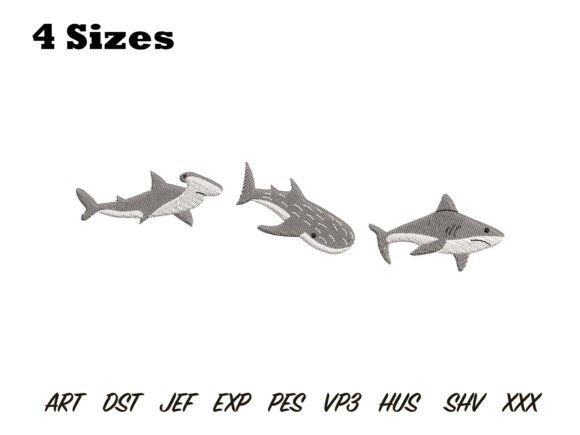
As an embroidery designer who’s stitched thousands of custom orders—from baby blankets to boutique aprons—I approached the Trio Shark Embroidery Design with cautious optimism. It’s easy to scroll past “cute” fish-themed designs on Creative Fabrica, but this one stood out immediately: three stylized sharks arranged in a balanced, rhythmic trio—whimsical without tipping into cluttered, friendly without feeling childish. The visual mood is lighthearted yet intentional: rounded fins, expressive eyes, and subtle texture in the scales suggest thoughtful digitizing, not just clip-art repurposing. It reads as a cohesive machine embroidery design, not a collection of separate elements slapped together.
Fits Naturally Into Everyday Handmade Workflows
In my studio, I test every new Creative Fabrica embroidery file against real production needs—not just “would this look nice?” but “will it hold up on a cotton-linen blend tote bag after six washes?” or “can I confidently offer this as a personalized gift on Etsy without re-stitching 20% of orders?” The Trio Shark Embroidery Design lands well across several categories: sweatshirt embroidery (especially on crewnecks and raglans), kitchen towel design (great contrast against natural weaves), and nursery decor (think pillow covers and crib bumper accents). Its scale and spacing make it ideal for medium hoop sizes—no awkward cropping or forced scaling needed. I’ve used it successfully on curved cap fronts by adjusting placement slightly and using a tear-away + cut-away stabilizer combo. It also translates cleanly into an embroidered patch when stitched on twill with a satin stitch border.
Performance on Challenging Fabrics & Surfaces
Where many playful designs falter, the Trio Shark Embroidery Design holds its own. On stretchy fabric like lightweight jersey (common for baby onesies), it held shape without puckering—thanks to moderate stitch density and smartly placed running stitch connectors between shark bodies. On dark fabric, the fill stitch coverage is generous enough to prevent show-through, especially when paired with high-contrast thread colors (navy thread on cream, lime green on charcoal). For textured surfaces like terry cloth towels, I added a light layer of water-soluble topping—and every fin detail remained crisp. That said, I’d avoid using it on ultra-thin silk or heavily napped fleece without first testing stitch tension and underlay. Tiny details—like the subtle gills and eye highlights—are present but not overly dense, so they don’t collapse or blur on low-stability substrates.
What Works Well Commercially
- Custom apparel: Adds instant charm to unisex tees and joggers—ideal for small-batch drops or seasonal collections.
- Tote bag design: Scales beautifully to 4x4 or 5x7 hoops; reads clearly even at arm’s length.
- Handmade gifts: Elevates baby blankets and toddler bibs with personality that feels handmade, not mass-produced.
- Etsy listings: Photographs exceptionally well—clean lines and balanced negative space make for strong printable mockups.
- Boutique merchandise: Supports brand consistency when paired with coordinating fonts or minimalist packaging.
Design Nuances That Build Buyer Trust
Customers notice what feels *considered*. The Trio Shark Embroidery Design delivers that quietly: consistent satin stitch directionality across all three sharks, smooth transitions between fill and outline stitches, and no floating threads or unnecessary jump stitches. That polish directly impacts how buyers perceive your handmade product—not as “a shark I found online,” but as a thoughtfully curated design asset. When customers see clean, confident stitching on their sweatshirt or kitchen towel, it reinforces trust in your craftsmanship. It also improves customer engagement: I’ve had repeat buyers specifically request “the trio shark version” after gifting one—proof that distinctive, well-executed embroidery becomes part of your brand voice.
Practical Notes Before You Stitch
Before adding the Trio Shark Embroidery Design to your next order, take these steps:
- Test on scrap fabric matching your final substrate—especially if using stretchy, dark, or textured material.
- Review thread color contrast: lighter shades pop best on deep backgrounds; richer tones anchor better on light fabrics.
- Check actual hoop size requirements—don’t assume compatibility. Confirm file details on the Creative Fabrica product page before committing to a large batch.
- Compare light and dark fabric mockups side-by-side to assess visibility of fine details.
- Use appropriate stabilizer: cut-away for knits, tear-away for stable wovens, plus topping for napped surfaces.
- Inspect small details post-stitch—especially the inner eye highlights and fin edges—on your first run.
- Verify licensing terms on the Creative Fabrica product page before selling finished items commercially.
Final Thoughts for Crafters & Small Business Owners
The Trio Shark Embroidery Design isn’t flashy—but it’s reliable, versatile, and quietly sophisticated for its category. It doesn’t try to be everything; instead, it does one thing exceptionally well: bring approachable, cheerful energy to everyday textiles. Whether you’re building a cohesive line of nursery decor, launching a summer-themed tote collection, or offering custom embroidered patches for craft fairs, this design fits naturally into your workflow—not as filler, but as a functional, market-ready digital embroidery file. It supports your creative entrepreneurship by saving digitizing time, reducing rework, and delivering consistent visual appeal across product types. As a working embroidery designer, I keep it in my go-to folder—not because it’s the most complex design I own, but because it’s one of the most consistently effective.