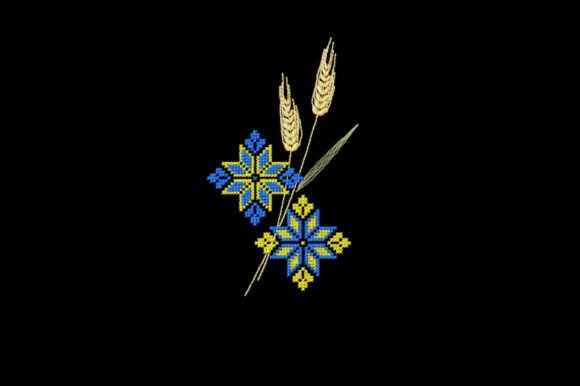
Ukrainian Folk Embroidery Design. Wheat.
A Thoughtful Review for Small Business Merchandise & Branded Patches
As an embroidery designer who’s developed hundreds of commercial machine embroidery designs for cafes, boutiques, bakeries, florists, and handmade brands, I approached Ukrainian Folk Embroidery Design. Wheat. with both respect for its cultural roots and a sharp eye for business utility. The title alone signals authenticity and heritage—two powerful assets for small businesses seeking warmth, storytelling, and visual distinction. The description—“This meticulous wheat cross-stitch pattern will transport you into tranquil fields of golden grain”—immediately sets a tone: rustic yet refined, grounded but elegant. It doesn’t shout; it invites. That makes it especially valuable for brands that prioritize sincerity over flash—think artisanal coffee roasters, slow-fashion studios, or family-run flower shops.
First Impression: Handmade Charm Meets Professional Polish
Ukrainian Folk Embroidery Design. Wheat. reads as classic, not dated; symbolic, not clichéd. Unlike generic wheat motifs found in clip art or vector libraries, this design carries the quiet intentionality of folk tradition—balanced spacing, organic rhythm in the stalks, and implied texture through stitch placement. It feels handmade, yes—but also thoroughly professional. That duality is gold for small business merch: customers sense craft without questioning quality. It leans toward warm, earthy, and timeless—ideal for brands building identity around sustainability, local roots, or generational care.
Real-World Performance Across Business Applications
In practice, Ukrainian Folk Embroidery Design. Wheat. shines brightest where subtlety and symbolism matter most:
- Embroidered patches: Perfect for sew-on or iron-on application on tote bags, aprons, or denim jackets. Its balanced negative space holds up well at 2.5"–3.5" width—large enough to read clearly, small enough to avoid bulk.
- Apron embroidery: Works beautifully on chest pockets or lower hems. The vertical flow of wheat stalks complements the natural line of an apron, adding quiet dignity without overwhelming function.
- Cap embroidery: Best placed on the front panel (not curved side) at 2.25"–2.75" wide. Avoid placing it too low—its horizontal spread needs breathing room on structured caps.
- Tote bag design: Ideal for center-back or lower-front placement. Paired with minimalist typography (“Est. 2018” or “Bloom & Bake”), it creates cohesive, shelf-ready branding.
- Staff uniforms & work shirts: Adds cohesion across teams without sacrificing individuality—especially effective when paired with neutral thread colors like oat, charcoal, or deep amber.
- Product packaging accents: Stitched onto fabric tags, linen pouches, or gift wrap bands, it elevates perceived value and reinforces artisanal positioning.
It also performs strongly in commercial embroidery environments: consistent stitch density means reliable hooping and minimal thread breaks across batches. As a digital embroidery file, it’s likely optimized for smooth transitions between satin and fill stitches—a subtle but critical detail for clean, production-ready output.
Where to Use It With Intention
While versatile, Ukrainian Folk Embroidery Design. Wheat. isn’t universally scalable. Exercise care in these scenarios:
- Small patch sizes under 1.75": Fine cross-stitch details may blur or lose definition. Always test at your target size before bulk production.
- Curved surfaces (e.g., cap bills or rounded tote handles): The design’s horizontal emphasis can distort if hooped incorrectly. Use proper stabilizer and consider slight simplification for extreme curves.
- Dark uniforms or textured fabrics (like heavy canvas or bouclé): Confirm thread color contrast—cream or ecru may vanish on charcoal twill unless backed with white underlay.
- Frequent-wash items (e.g., kitchen aprons or café staff shirts): Verify stitch density supports durability. Overly dense fills may stiffen fabric or encourage fraying over time.
How It Strengthens Brand Identity & Customer Trust
For small businesses, every embroidered detail communicates values. Ukrainian Folk Embroidery Design. Wheat. quietly signals authenticity, care, and connection—to land, to craft, to legacy. That builds trust faster than a slogan ever could. When customers see it on a bakery’s flour-dusted apron or a florist’s reusable tote, they don’t just register a logo—they feel continuity, intention, and human scale. It supports visual consistency across touchpoints while retaining handmade warmth. And because it avoids trend-driven motifs, it won’t date your design assets in 6 months. That longevity directly boosts ROI on your small business merch investment.
Practical Designer Notes Before You Stitch
Before committing to production, here’s what I always do—and recommend you do—with Ukrainian Folk Embroidery Design. Wheat.:
- Test it in black and white first—this reveals clarity issues invisible in color previews.
- Check how it renders at your smallest intended patch size (e.g., 2" wide) on actual fabric—not just software.
- Review thread color contrast against your base fabric; request physical thread swatches if ordering custom runs.
- Inspect spacing between stalks and grains—tight areas may require adjusted tension or stabilizer weight.
- Confirm hoop size compatibility with your embroidery machine and common garment zones (e.g., cap fronts often max out at 4"x4").
- Test on real fabric with your preferred stabilizer—especially for stretchy or napped textiles.
- Create a printable mockup for client approval before stitching; context matters more than isolated design files.
- Compare it beside your existing design assets—does it harmonize with fonts, icons, or other embroidery elements?
- Verify commercial licensing—this is essential for custom apparel, wholesale, or resale. If unclear, contact the seller before use in commercial embroidery projects.
Remember: Ukrainian Folk Embroidery Design. Wheat. isn’t just decoration—it’s a narrative tool, a quality signal, and a functional element of your brand ecosystem. Used thoughtfully, it transforms everyday items—aprons, caps, totes—into meaningful extensions of your story. Whether you’re launching an Etsy shop, outfitting a new café team, or refreshing boutique merchandise, this machine embroidery design offers quiet strength, cultural resonance, and real-world versatility. Just stitch with purpose—and always test first.