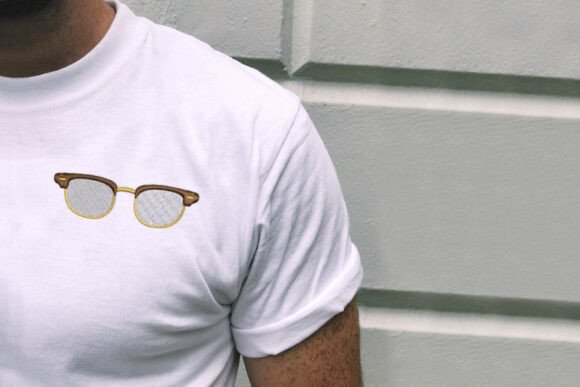
Vintage Horn Rim Glasses Embroidery
A Sharp, Witty Focal Point for Craft Fair Booths
As an embroidery designer who’s prepped over 200 craft fair booths—and watched which designs stop foot traffic dead in its tracks—I’ll say it plainly: Vintage Horn Rim Glasses Embroidery lands with quiet confidence. It’s not loud or glittery, but it’s instantly legible, cleverly nostalgic, and deeply wearable. First impression? Smart, minimalist, and just a little witty—think mid-century librarian meets modern indie boutique. It reads as premium handmade, not mass-produced, and fits seamlessly into farmhouse, urban artisan, and vintage-modern aesthetics. That versatility is gold when you’re curating a cohesive booth display across tote bags, aprons, tea towels, and patches.
Where This Design Shines On Real Handmade Products
Tote bags: A single pair centered on the front pocket or subtly placed near the strap anchor makes a confident statement—especially on natural canvas or oat linen. Customers love recognizing the detail at arm’s length, and the clean silhouette holds up beautifully even at medium scale (3.5"–4.5").
Aprons and tea towel embroidery: Positioned above the pocket or along the hem, Vintage Horn Rim Glasses Embroidery adds personality without overwhelming utility. On textured flour-sack towels, opt for slightly larger sizes (5"–6") to ensure lens definition stays crisp against the weave.
Embroidered patches and fabric pouches: This is where the design flexes hardest. At 2.5"–3", it reads clearly as a standalone motif—ideal for iron-on or sew-on patches customers can collect or personalize. Small pouches (like cosmetic or glasses cases) benefit from the thematic relevance—making it feel intentional, not decorative.
Caps and pillow covers: Use caution here. The frame shape works well on flat-front caps, but avoid curved crowns unless you’ve tested stitch pull and alignment. On pillow covers, center it boldly on a neutral linen background—it reads as elevated home decor, not crafty filler.
Market bags and handmade gifts: Paired with subtle typography (“Read More,” “Lens Flare Approved”) or stitched onto a leather-look tag, Vintage Horn Rim Glasses Embroidery elevates gifting. It signals thoughtfulness—perfect for bookish birthdays, teacher appreciation, or optometrist office thank-yous.
Production Realities: What Works—and What Needs Testing
This machine embroidery design is refreshingly straightforward—but don’t skip validation. Its strength lies in clarity, not complexity. That means stitch density matters more than flash. Review the file before batch production: look for tight corners around the nose bridge and temple ends—these areas can shift on stretchy or loosely woven fabrics without proper stabilizer. Also check whether the lens fill uses satin or fill stitch; dense satin may pucker on terry cloth or thick denim unless you adjust underlay or reduce density manually.
It performs reliably across 8 formats and 10 sizes—but size choice directly impacts readability. Below 2", fine details (like hinge lines or subtle rim texture) soften. For dark fabric, test thread contrast aggressively: light gray or ecru lenses pop on navy; charcoal frames hold weight on cream or oat. Always run a scrap test using your exact hoop size, stabilizer combo, and fabric texture—you’ll catch skipped stitches or distortion before committing to 50 tote bags.
Booth & Buyer Psychology: Why It Converts
In a sea of florals and quotes, Vintage Horn Rim Glasses Embroidery stands out by inviting recognition, not interpretation. Shoppers pause because they see themselves—or someone they know—in the motif. That emotional hook drives engagement: “Oh, my dad wore these!” or “That’s *so* me.” It also photographs exceptionally well for Etsy listings and printable mockups—clean lines, strong negative space, and balanced proportions translate crisply to thumbnails and lifestyle shots.
For small shop products, it strengthens brand consistency when used across categories: same design on a patch, a tea towel, and a cap creates visual rhythm. And unlike trend-heavy motifs, it avoids dating quickly—making it a smart long-term design asset, not a seasonal gamble.
Critical Notes Before You Stitch
- Test on scrap fabric first—especially with textured towels, curved cap fronts, or dark fabric where thread contrast is critical.
- Confirm commercial licensing before selling finished products—this digital embroidery file is intended for commercial embroidery use, but always verify terms in the download.
- Use cutaway or tear-away stabilizer depending on fabric weight; lightweight knits need more support than quilting cotton.
- Review spacing between elements—tight temple curves may need slight digitizing tweaks if stitching on highly curved surfaces like baseball caps.
- Create at least one real mockup before listing—hold it in natural light, photograph it next to similar products, and ask a non-crafter friend what they notice first.
- Compare thread colors across fabric swatches—lens color transforms the entire mood: amber = vintage reader, smoke gray = cool sunglass, rose = playful twist.
Final Thought: A Quiet Workhorse With Personality
Vintage Horn Rim Glasses Embroidery isn’t flashy—but it’s reliably saleable. It bridges generations, styles, and product types without straining. For Etsy sellers juggling SEO and charm, it’s a strong keyword-friendly phrase (“vintage glasses embroidery,” “reading glasses design”) that also feels human. For craft fair sellers, it’s a conversation starter that sells itself through wit and wearability. As an embroidery designer, I reach for this file when I need something that looks handmade, not machine-made—something that says, “I made this *for you*,” not “I ran this through a hoop.” That’s the difference between inventory and intention. And in a handmade market? Intention always wins.