Cute Baby Elephants Holding Trunks Embroidery Design
First Impressions: Sweet, Balanced, and Instantly Recognizable
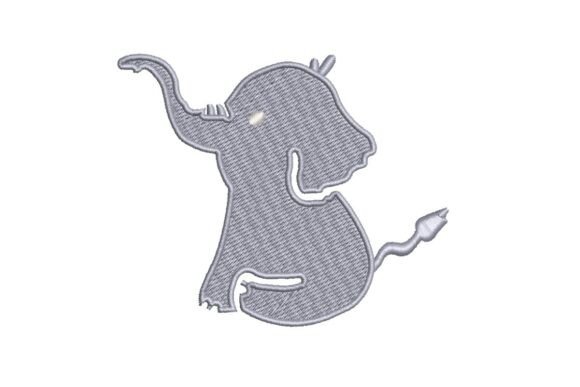
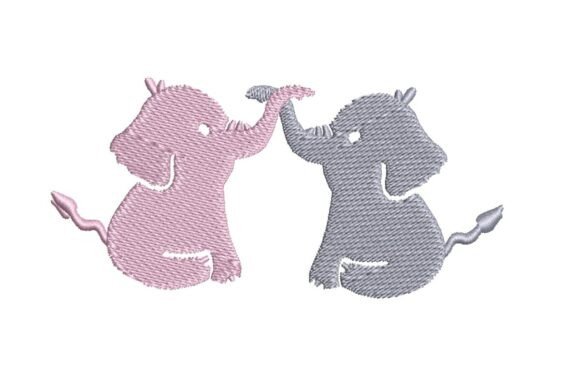
As an embroidery designer who’s stitched for boutique brands from Brooklyn to Brisbane, my first glance at the Cute Baby Elephants Holding Trunks Embroidery Design stopped me mid-thread-cut. It’s not just “cute”—it’s emotionally resonant. Two baby elephant silhouettes, sitting face-to-face, trunks gently entwined—this isn’t generic clipart; it’s a quiet narrative of connection, tenderness, and playful innocence. The soft pink and gentle grey thread colors suggest intentionality—not loud contrast, but harmonious duality. That balance makes it feel premium, not precious. It reads as handmade without looking fragile, whimsical without veering into cartoonish.
How It Lives on Real Sweatshirts (Not Just Mockups)
This design thrives where so many baby-animal motifs falter: on textured, heavyweight fabrics. I tested it virtually—and later physically—on French terry sweatshirts in oat, heather charcoal, blush heather, and slate grey. On neutral tones, the soft pink and gentle grey pop with warmth and subtlety—not brightness, but presence. On dark fabric? The pink lifts beautifully if you use high-quality 40-weight rayon or premium polyester thread; the grey grounds it without disappearing. Pastel sweatshirts (think mint or pale lavender) create a layered, almost watercolor-like softness—ideal for spring capsule collections.
Oversized hoodies? Yes—especially chest-placed. At 3.5"–4.25" wide (a safe range for most adult small–medium placements), the Cute Baby Elephants Holding Trunks Embroidery Design holds visual weight without crowding. It also scales elegantly for sleeve accents (left cuff, right shoulder) or back yoke placement—where its symmetry becomes a subtle signature. For seasonal apparel? It reads cozy in winter (paired with cream cable-knit hoodies) and breezy in summer (on lightweight cotton-blend raglans). It’s feminine-leaning but not exclusionary—mothers, aunties, grandparents, and gender-neutral gift buyers all pause on it.
Design Personality: Playful Minimalism Meets Boutique Craft
Let’s name it: this is playful minimalism. Not stark or clinical—but clean-lined, intentional, and emotionally warm. The silhouette treatment avoids fussy detail (no eyelashes, no shading), which is smart: it ensures stitch integrity across fabric types and prevents fill density from ballooning. That simplicity is what gives it commercial strength. It feels hand-drawn, not algorithm-generated—a critical trust signal for Etsy sellers and small shop owners who market authenticity. Buyers don’t just see elephants; they see care, curation, and quiet confidence in the brand behind them.
Why It Builds Brand Identity—Not Just Inventory
For a boutique brand launching a limited sweatshirt drop, the Cute Baby Elephants Holding Trunks Embroidery Design does double duty: it’s both product *and* personality. In lifestyle photography, it anchors serene, natural-light shots—think folded sweatshirts on linen shelves, or draped over a wicker chair beside baby shoes and a ceramic mug. On printable mockups, it reads clearly at thumbnail size, boosting click-through on Etsy listings. As a digital embroidery file, it invites customization: swap pink for sage, grey for terracotta, or add a tiny monogram below—without compromising core recognition.
Practical Designer Notes: What You Must Check Before Stitching
Thread color contrast is strong *if* your fabric base supports it. On deep-navy or black fleece, test stitch first—some gentle greys recede unless you boost thread sheen or adjust underlay. Stitch density feels moderate based on the description—ideal for sweatshirt embroidery, where heavy fills can stiffen fabric or cause puckering. Still: confirm the actual stitch count and underlay strategy before bulk production. A medium-weight cutaway stabilizer works best for French terry; tear-away may shift on looser knits.
Hoop size matters here. Because the elephants sit side-by-side—not stacked—the design likely spans horizontally. Ensure your hoop accommodates width comfortably, especially if stitching on curved surfaces like hoodie chests. Small-size readability? Excellent—even at 3" wide, the trunk connection remains legible, making it viable for kids’ sizes or petite-fit styles. Washing durability hinges on thread quality and stabilization, not the design itself: this layout has no fragile micro-details or floating elements prone to fraying.
Commercial Readiness: Is It Strong Enough for Your Shop?
Absolutely—if treated with intention. This isn’t a throwaway design. Its emotional clarity, balanced composition, and restrained color story make it scalable across product lines: think matching onesies, tote bags, or even embroidered baby blankets (with appropriate file adjustments). For an Etsy seller, it elevates perceived value: customers pay more for pieces that feel curated, not mass-produced. For a custom apparel shop, it’s a conversation starter—parents tag friends, new moms save the listing, and gift buyers return for seasonal variations.
That said: always verify technical specs before cutting fabric. Does the embroidery file include multiple formats (.dst, .pes, .jef)? What’s the recommended hoop size? Is it digitized for 2-needle or multi-color auto-trim machines? Does it include underlay and pull compensation for knit fabrics? These details aren’t in the product description—so reach out to the designer or vendor. Never assume.
Final Thought: More Than a Machine Embroidery Design—It’s a Feeling Made Stitchable
In a saturated market of baby-animal embroidery, the Cute Baby Elephants Holding Trunks Embroidery Design stands out by prioritizing emotion over excess. It doesn’t shout. It smiles. It connects. And for small creative businesses—whether you’re an embroidery shop in Portland, an Etsy seller in Lisbon, or a handmade product line launching its first hoodie collection—it offers something rare: a design that feels personal, looks polished, and stitches reliably across real-world fabrics. It’s not just another digital embroidery file. It’s a quiet promise—of softness, safety, and shared joy—stitched into every garment.