Gingerbread Baker Embroidery PNG
First Impression: Warm, Whimsical, and Ready for Holiday Charm
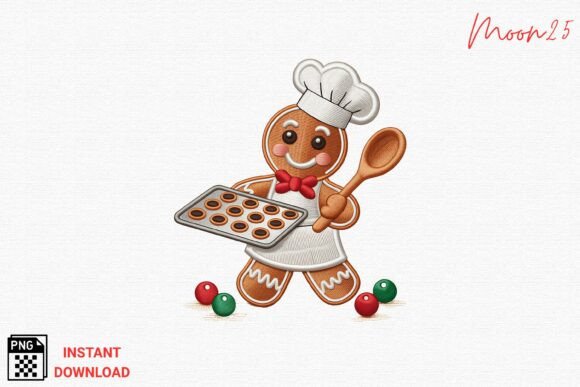
When I opened the Gingerbread Baker Embroidery PNG, my immediate thought was: “This feels like a hug in stitchable form.” The gingerbread man stands confidently—chef hat tilted just so, apron tied neatly, tray of cookies balanced in one hand, wooden spoon held upright in the other. It’s not overly cutesy or cartoonish; instead, it carries gentle personality and quiet confidence. The outline is clean and intentional, with enough visual weight to hold up at 3–4 inches tall but still delicate enough for baby onesies or tea towel corners. As a designer who’s stitched hundreds of holiday motifs, I appreciate how this design leans into warmth without leaning on cliché.
A Real-World Test: Stitching It on a Linen Kitchen Towel
Last week, I prepped a batch of holiday-themed kitchen towels for a local boutique—and chose Gingerbread Baker Embroidery PNG as the centerpiece. Why? Because it’s instantly legible, scales beautifully, and reads as handmade—not digital. On medium-weight linen, the design stitched cleanly with standard stabilizer. The apron and hat held crisp satin-stitched edges, while the cookie tray used subtle fill stitch variation that added texture without density overload. Customers loved the tactile detail: they could *feel* the spoon handle, trace the cookie outlines with their fingers. That’s the difference between decoration and connection.
Where It Shines (and Where It Needs Thought)
This Gingerbread Baker Embroidery PNG excels in projects where charm and clarity matter most:
- Custom apparel: Looks joyful on crewneck sweatshirts, especially when paired with simple thread colors—cream on charcoal, red on natural cotton.
- Embroidered patch: Clean outer edge makes it ideal for iron-on or sew-on patches on denim jackets or aprons.
- Baby embroidery: Soft shape and rounded features suit onesies and burp cloths—just avoid dense fill areas near seams where stitching might stiffen fabric.
- Tote bag design: Works well centered on the front panel or scaled down for a subtle corner accent.
- Holiday gift & nursery decor: Feels special on pillow covers or framed hoop art—its friendly expression invites smiles, not scrutiny.
But here’s what I watched closely:
- Small hoop sizes: At under 2.5 inches wide, fine details (like the spoon’s curve or individual cookies) may blur. Test before committing to a 3-inch hoop.
- Textured or stretchy fabric: On terry cloth towels or lightweight knits, use cutaway + tear-away combo stabilizer—this design has enough line work to shift if unsupported.
- Dark fabric: The PNG’s contrast relies on clear outlines. For black or navy backgrounds, verify your embroidery software preserves edge definition—or consider adding a light underlay stitch.
- Curved surfaces (caps, mugs): While the shape is forgiving, avoid placing it too close to the bill seam—those small hands and tray edges can distort.
How It Shapes Your Craft Business—and Your Customer’s Experience
As an Etsy seller and small shop product developer, I judge designs not just by stitch count—but by how they land emotionally and functionally. Gingerbread Baker Embroidery PNG elevates perceived value: it reads as thoughtful, not templated. When customers see this on a personalized sweatshirt or embroidered tea towel, they don’t think “mass-produced graphic.” They think “someone made this *for me*.” That trust matters—especially during holiday gifting season, when buyers scroll fast and decide in seconds.
It also supports brand consistency. Whether you’re building a cozy baking-themed shop or launching a line of handmade kitchen goods, this design fits naturally—no forced styling needed. And because it’s a clean PNG, it adapts easily to printable mockups, social media previews, and digital product listings. Just remember: if you’re selling finished embroidered items, confirm licensing terms before listing. If you’re reselling the file itself, ensure it’s cleared for commercial embroidery use.
Practical Designer Notes Before You Stitch
Before running Gingerbread Baker Embroidery PNG on your next project, do these five things:
- Test on scrap fabric first—especially if using textured weaves or blends.
- Check thread color contrast against your base fabric in natural light—not just screen preview.
- Review stitch density in your embroidery software: look for overfilled cookie shapes or tight corners that could cause puckering.
- Confirm hoop size compatibility with your machine’s throat space and the design’s width/height ratio.
- Inspect small details like the spoon handle or apron strings—they should be wide enough to stitch reliably at your intended size.
Also worth noting: run a quick black-and-white mockup. This design relies on shape more than shading, so it holds up beautifully in monochrome—ideal for minimalist branding or vintage-style packaging.
Final Thought: A Design That Stitches Well—And Sells Well
Gingerbread Baker Embroidery PNG isn’t flashy. It doesn’t shout. But it delivers exactly what crafters and creative entrepreneurs need: reliability, warmth, and quiet professionalism. It works as a machine embroidery design for custom apparel, as an applique design for layered textiles, and as a digital embroidery file that enhances—not overshadows—your handmade product. Whether you’re stitching for joy, gifting with meaning, or growing a craft business, this is the kind of design that earns repeat orders and heartfelt thank-you notes. Sweet, yes—but more importantly, smart.